
Juicy Butter-Basted Chicken Breast: How to Cook Chicken Breast Right
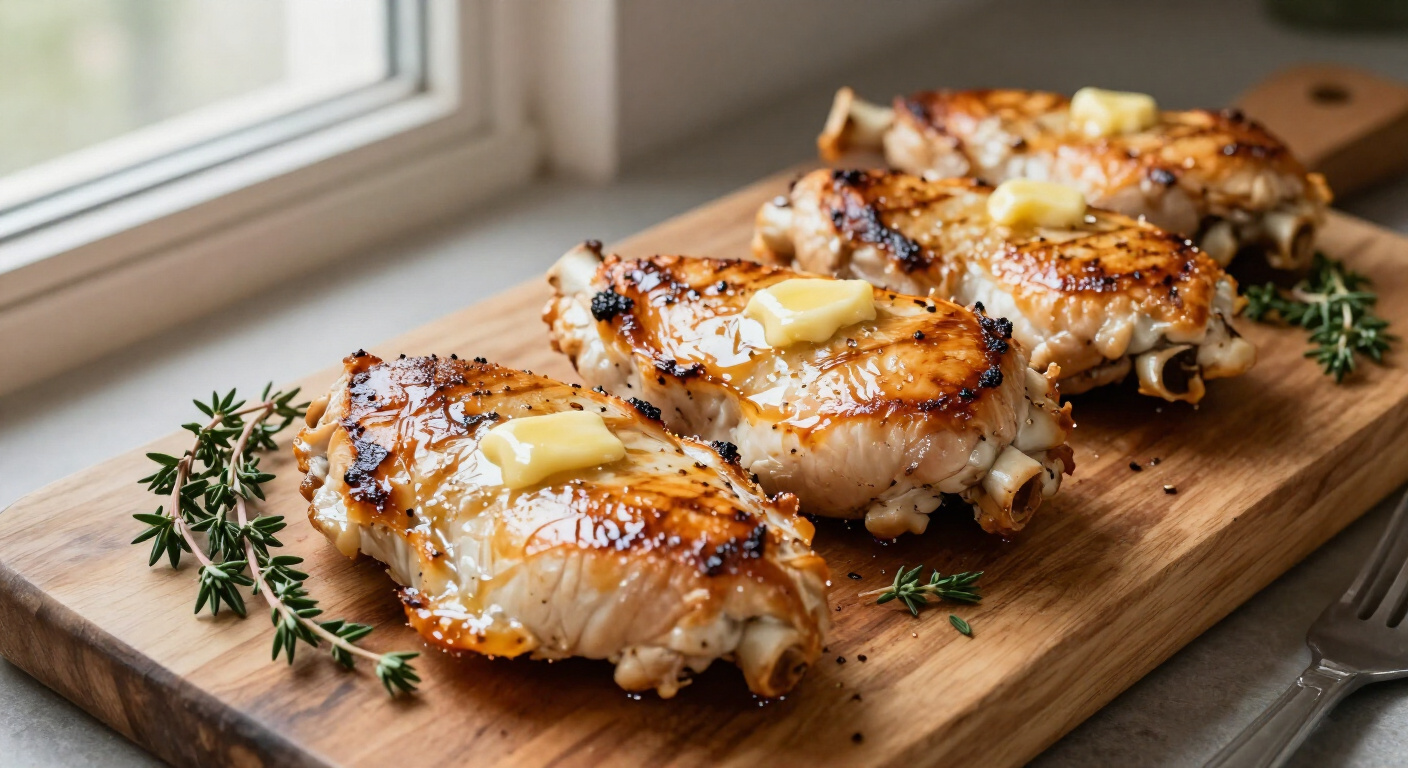
How to cook chicken breast that stays juicy: golden, sizzling and butter-basted in just 30 minutes. Get the simple skillet method inside.
Golden-brown and sizzling, these butter-basted chicken breasts come off the skillet juicy in just 30 minutes. Learning how to cook chicken breast this way makes a weeknight dinner feel like a treat.
Why This Recipe Works
• Salt and rest the chicken: Salt draws moisture to the surface, and the 8-10 minute rest lets it dry out. That dry skin browns instead of steaming.
• Wait for the oil to shimmer: Oil at 400°F sears the surface on contact. Waiting for the ripple means a crust forms fast, so the chicken doesn't soak up grease.
• Drop the heat before the butter: High heat scorches butter's milk solids. Lowering to medium lets it foam and turn nutty, and spooning that foam over the meat keeps the surface moist.
• Rest the chicken under loose foil: Muscle fibers relax while the juices settle back through the meat. Cutting too soon sends them pooling onto the board.
Ingredients You'll Need
Boneless Skinless Chicken Breasts: These lean cuts are the heart of the dish, and at about 6 oz each they cook evenly. Patting them dry lets the surface brown instead of steam. If you can't find breasts, boneless skinless thighs work well. They stay juicier, so check doneness a little early.
Olive Oil: Olive oil gives the skillet a thin, even layer that helps the crust form. One tablespoon is plenty for four breasts. Avocado oil or any neutral vegetable oil is a good swap with a similar heat tolerance.
Kosher Salt: Its large, coarse flakes season the meat evenly and pull moisture to the surface, where it helps the sear. One teaspoon, split across both sides, does most of the flavor work. Fine sea salt also works, but use about ¾ teaspoon because it packs more densely.
Freshly Ground Black Pepper: Pepper adds a sharp, warm bite that balances the rich butter. Grinding it fresh keeps the aroma bright and lively. Pre-ground black pepper from a jar is a fine stand-in, though the flavor will be a little more muted.
Garlic Powder: Garlic powder brings a mellow, toasty garlic flavor without the risk of fresh cloves scorching in hot oil. Half a teaspoon coats both sides without any raw bite. Granulated garlic is a close swap with nearly the same flavor.
Unsalted Butter: Butter foams and turns nutty once the heat drops, then gets spooned over the chicken for a rich, glossy finish. Using unsalted butter lets you control the salt. Ghee is a great substitute because it handles heat well, or use salted butter and skip a pinch of the kosher salt.
Fresh Thyme Sprigs: Thyme releases a woodsy, slightly floral perfume into the foaming butter. Leaving the sprigs whole makes them easy to remove before serving. If you don't have fresh thyme, use about ⅓ teaspoon dried thyme, though the aroma will be softer.


How to Make It (Step by Step)
One skillet does it all: sear the chicken until golden-brown, then baste it in nutty butter until it's cooked through. Even if you've never basted anything before, you'll have juicy chicken on the table tonight.

- Pat the chicken dry, then season both sides with 1 teaspoon kosher salt, ½ teaspoon black pepper, and ½ teaspoon garlic powder. Let it rest at room temperature (70°F / 21°C) for 8-10 minutes, until the surface looks dry and evenly coated.

- Heat the olive oil in a large heavy skillet over medium-high heat (400°F / 200°C) for 1-2 minutes, until it shimmers and ripples across the pan. Hot oil means a better crust.

- Lay the breasts in the hot oil and sear without moving them until the undersides turn deep golden-brown, 5-6 minutes at medium-high heat (400°F / 200°C). Be patient. Don't peek too early.

- Flip the breasts with tongs and sear the second side until golden-brown, 4-5 minutes at medium-high heat (400°F / 200°C). The crust should feel firm when you nudge it.

- Lower the heat to medium (325°F / 165°C), then add the butter and thyme sprigs to the skillet. Let the butter melt and foam for 1-2 minutes, until it smells nutty.

- Tilt the pan and spoon the foaming butter over the breasts, basting continuously until the thickest part reads 165°F / 74°C and the meat feels springy, 6-8 minutes at medium heat (325°F / 165°C). Keep spooning. Your kitchen will smell amazing.

- Move the breasts to a cutting board, tent loosely with foil, and rest for 5-7 minutes at room temperature (70°F / 21°C). Resting keeps the juices inside, so don't skip it.

Recipe Notes
• Storage: Keep leftovers in an airtight container for up to 4 days. Freeze sliced chicken for up to 3 months. Reheat gently in a covered skillet with a splash of water.
• Key substitution: No fresh thyme? Use ½ teaspoon dried thyme instead. Add it with the butter, since dried herbs are more concentrated.
• Make-ahead tip: Mix the salt, pepper, and garlic powder in a small jar up to a month ahead. Shake well before seasoning the chicken.
• Common mistake: Cooking unevenly thick breasts. Thin ends dry out while the thick centers catch up. Pound the thickest parts to an even thickness first.
Serving size: 1 portion · Calories: 280 · Total Fat: 13g · Saturated Fat: 5g · Carbs: 0g · Fiber: 0g · Sugar: 0g · Protein: 42g · Sodium: 420mg
Tips and Tricks
- Equipment: Use a large heavy skillet: The thick base holds heat evenly, so every breast browns at the same rate with no hot spots.

- Temperature precision: Pull at 165°F / 74°C: Check the thickest part with a thermometer. That reading keeps the meat juicy and fully cooked.
- Common mistake: Crowding the pan: Packing the breasts too close traps steam. You lose the golden crust you worked so hard to build.
- Flavour upgrade: Add lemon zest: Grate a little lemon zest over the rested chicken. It brightens the butter without changing the recipe.
- Texture tip: Slice against the grain: Cut thick slices across the muscle fibers after resting. Shorter fibers feel tender and stay moist on the fork.

Frequently Asked Questions
Can I make this dairy-free by swapping the butter for another fat?
Yes, swap the 2 tablespoons butter for 2 tablespoons plant-based butter sticks, which brown and foam much like dairy butter. If you want a simpler option, use 1 tablespoon olive oil plus a pinch of extra garlic powder, though you'll lose the nutty flavor.
Can I freeze raw seasoned chicken breasts before cooking them?
Yes, season the breasts, wrap each one tightly, and freeze for up to 3 months. Thaw overnight in the fridge, then pat dry before searing to get the same golden crust.
Why does my chicken stick to the skillet and tear when I flip it?
The crust isn't set yet, so the meat is still bonding to the pan. Wait until the breast lifts off with a gentle nudge, which usually takes another minute, and use a heavy skillet that's fully preheated.
What to Serve With This
- Lemon Garlic Green Beans: Green beans tossed with lemon zest and garlic bring a bright, zesty crunch against the rich butter.
- Cucumber Tomato Salad: Cool cucumber and juicy tomato dressed in red wine vinegar add a sharp, fresh pop to every bite.
- Creamy Mashed Potatoes: Silky mashed potatoes soften the golden crust and soak up the pan juices beautifully.
- Peppery Arugula Salad: Arugula with a tangy Dijon vinaigrette cuts the richness and keeps the plate feeling light.

Juicy Butter-Basted Chicken Breast: How to Cook Chicken Breast Right
Dinner / American
- Prep
- 10 min
- Cook
- 20 min
- Total
- 30 min
- Servings
- 4
- Calories
- 280 kcal
Ingredients
- 4 boneless skinless chicken breasts (about 6 oz each), patted dry
- 1 tablespoon olive oil
- 1 teaspoon kosher salt
- ½ teaspoon freshly ground black pepper
- ½ teaspoon garlic powder
- 2 tablespoons unsalted butter
- 3 sprigs fresh thyme
Instructions
- Pat the chicken dry, then season both sides with 1 teaspoon kosher salt, ½ teaspoon black pepper, and ½ teaspoon garlic powder. Let it rest at room temperature (70°F / 21°C) for 8-10 minutes, until the surface looks dry and evenly coated.
- Heat the olive oil in a large heavy skillet over medium-high heat (400°F / 200°C) for 1-2 minutes, until it shimmers and ripples across the pan. Hot oil means a better crust.
- Lay the breasts in the hot oil and sear without moving them until the undersides turn deep golden-brown, 5-6 minutes at medium-high heat (400°F / 200°C). Be patient. Don't peek too early.
- Flip the breasts with tongs and sear the second side until golden-brown, 4-5 minutes at medium-high heat (400°F / 200°C). The crust should feel firm when you nudge it.
- Lower the heat to medium (325°F / 165°C), then add the butter and thyme sprigs to the skillet. Let the butter melt and foam for 1-2 minutes, until it smells nutty.
- Tilt the pan and spoon the foaming butter over the breasts, basting continuously until the thickest part reads 165°F / 74°C and the meat feels springy, 6-8 minutes at medium heat (325°F / 165°C). Keep spooning. Your kitchen will smell amazing.
- Move the breasts to a cutting board, tent loosely with foil, and rest for 5-7 minutes at room temperature (70°F / 21°C). Resting keeps the juices inside, so don't skip it.
Share this article
About the author

Darnell Booker
Darnell learned the grill from his uncle, who told him a man who can feed a crowd never eats alone. The uncle was right, and Darnell misses him every time the smoke rolls off the kettle. Wings and roasts in the driveway are how he keeps the whole block close, and he takes that job seriously.
Related articles
 chicken breast
Golden-Crusted Juicy Pan Seared Chicken Breast Recipe
Pan seared chicken breast with a crackling crust, ready in 25 minutes. Grab the seasoning blend and get dinner on the table tonight!
 chicken breast
Juicy Baked Boneless Skinless Chicken Breast Recipe
Baked boneless skinless chicken breast that's golden, smoky, and juicy in just 35 minutes. Get the easy oven recipe that never dries out on busy nights.